By hand.
With care.
From the vineyard to the cellar.
A woven basket, an old press, hands among the grapes. Many small actions lie behind a bottle. These images explore the craft and the biodynamic way of looking at soil, plants and animals.
It begins with picking.
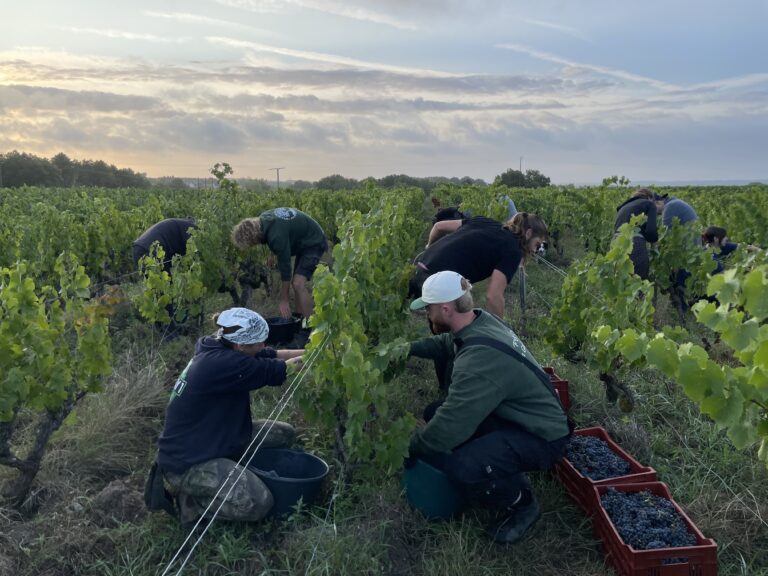
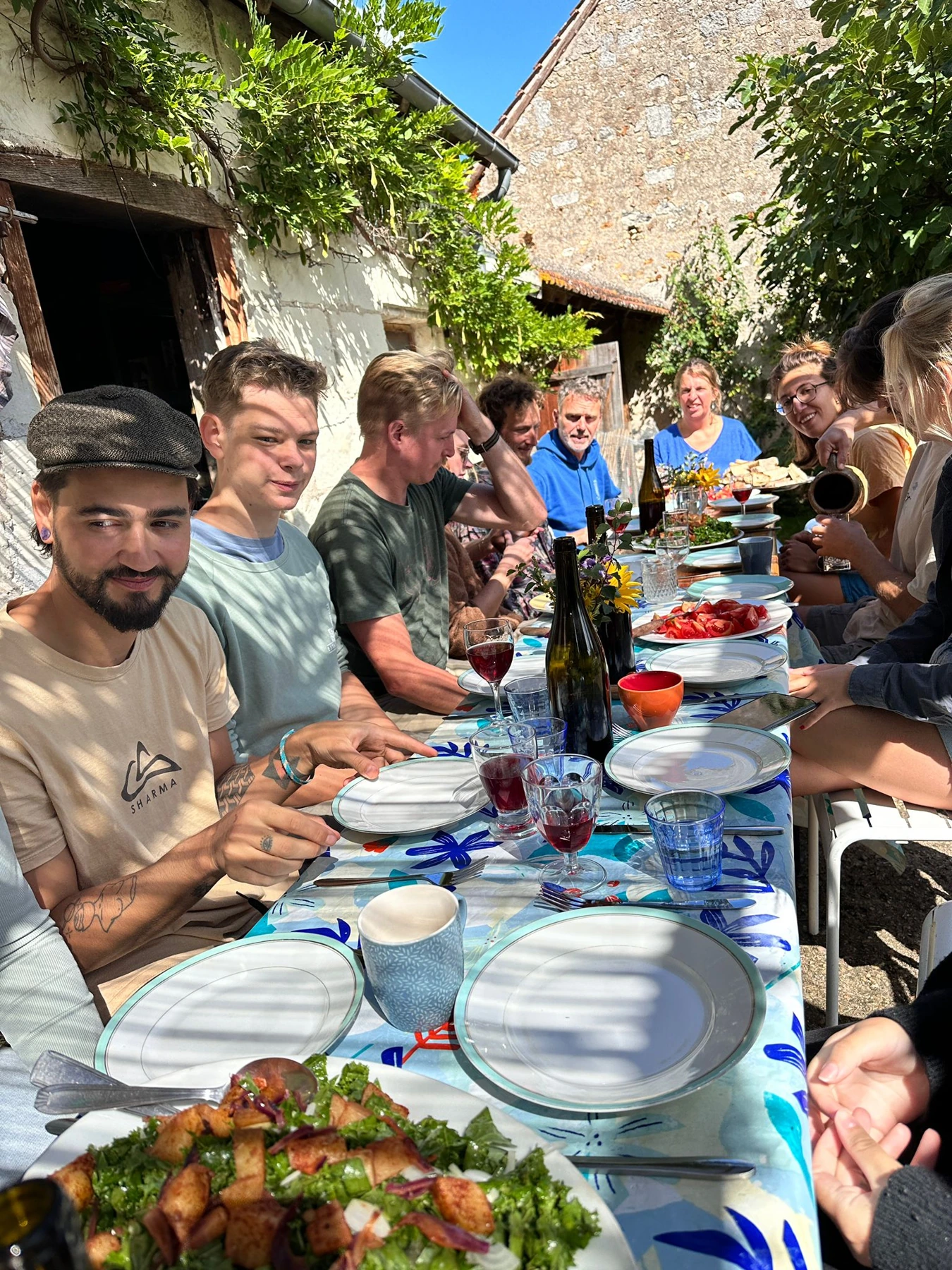
Picking by hand brings you close to each plant and bunch. The pickers look, choose and fill the crates. It takes time, attention and a team that understands the task. At La Taupe, that shared work belongs to harvest.
Destemming with an égrappoir.
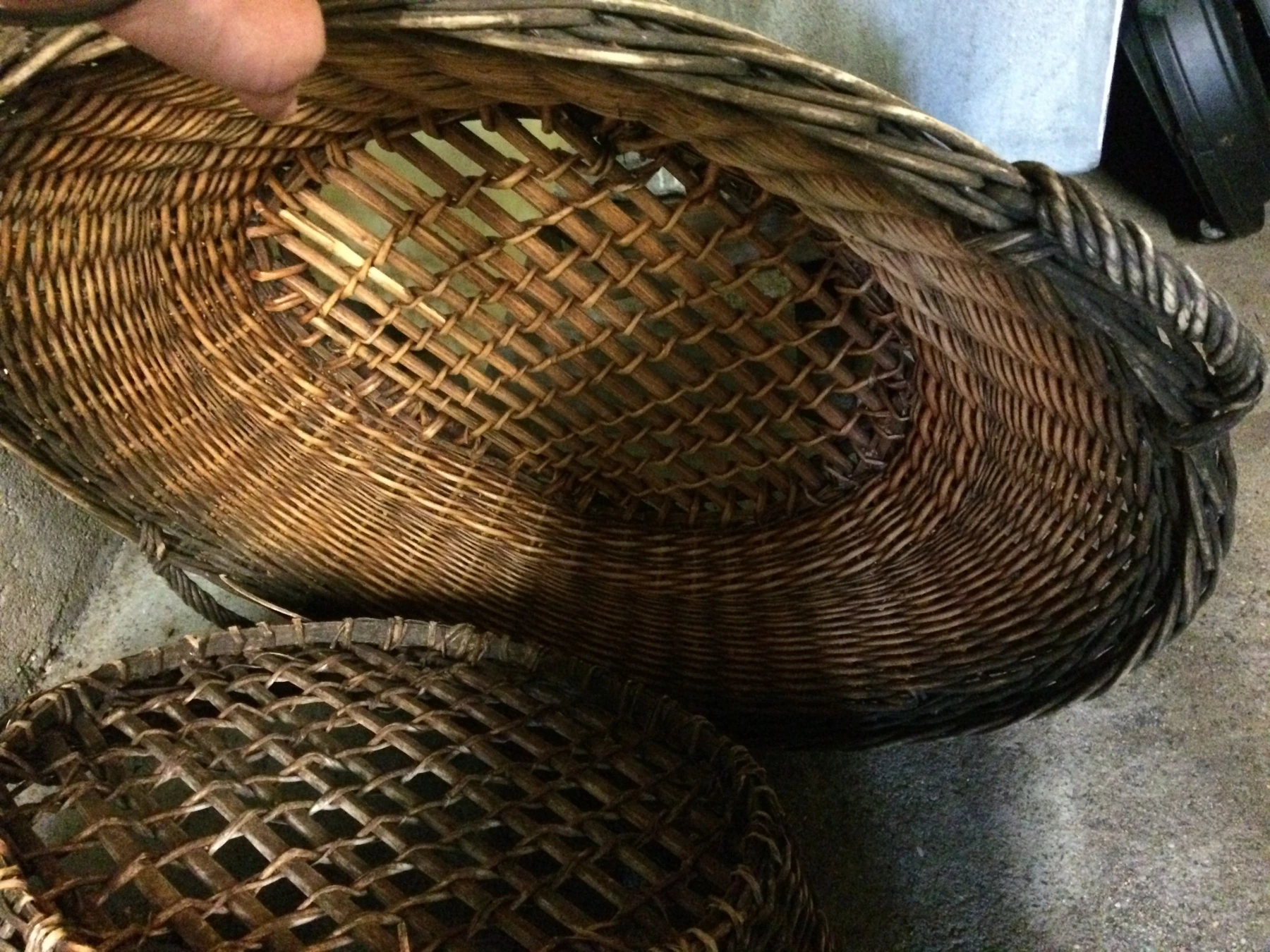
Destemming means separating grapes from their stems, or égrappage in French. This woven égrappoir is an example of a tool for doing it by hand. The method a grower chooses depends on the grapes and the wine they want to make.
The old press. The cellar.
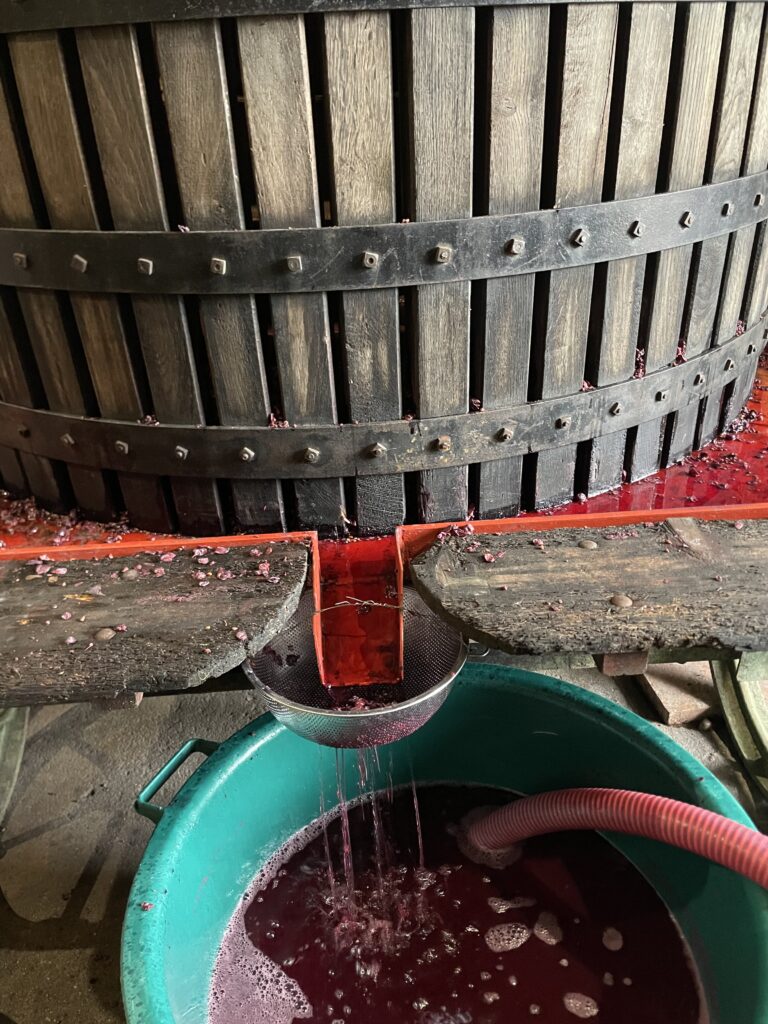
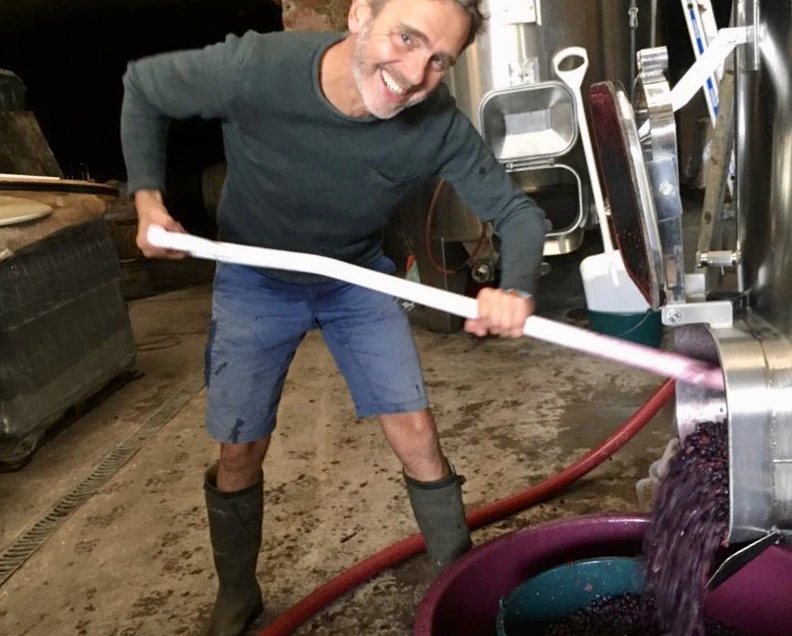
At La Taupe we use an old wooden press. Here you can see the juice running from it. The cellar work remains tangible too: cleaning, moving hoses, filling barrels, observing and tasting. Bert knows every step of that work.
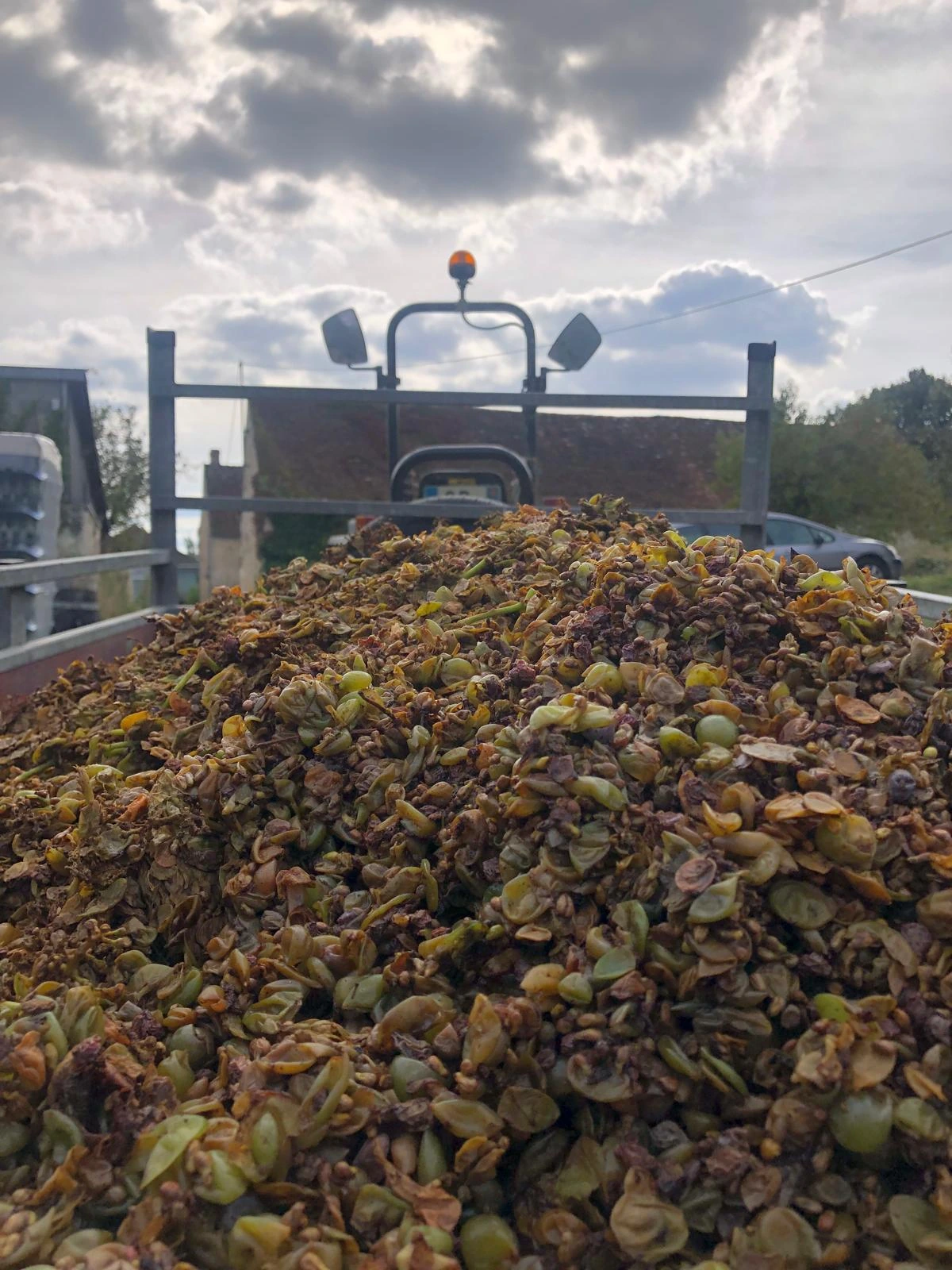
After pressing: the marc.
After pressing, skins, seeds and other grape remains are left behind. In French, these are called marc. Here we are taking them away. Emptying the press and moving the remains are part of the cellar work too.
Biodynamics: caring for the whole.
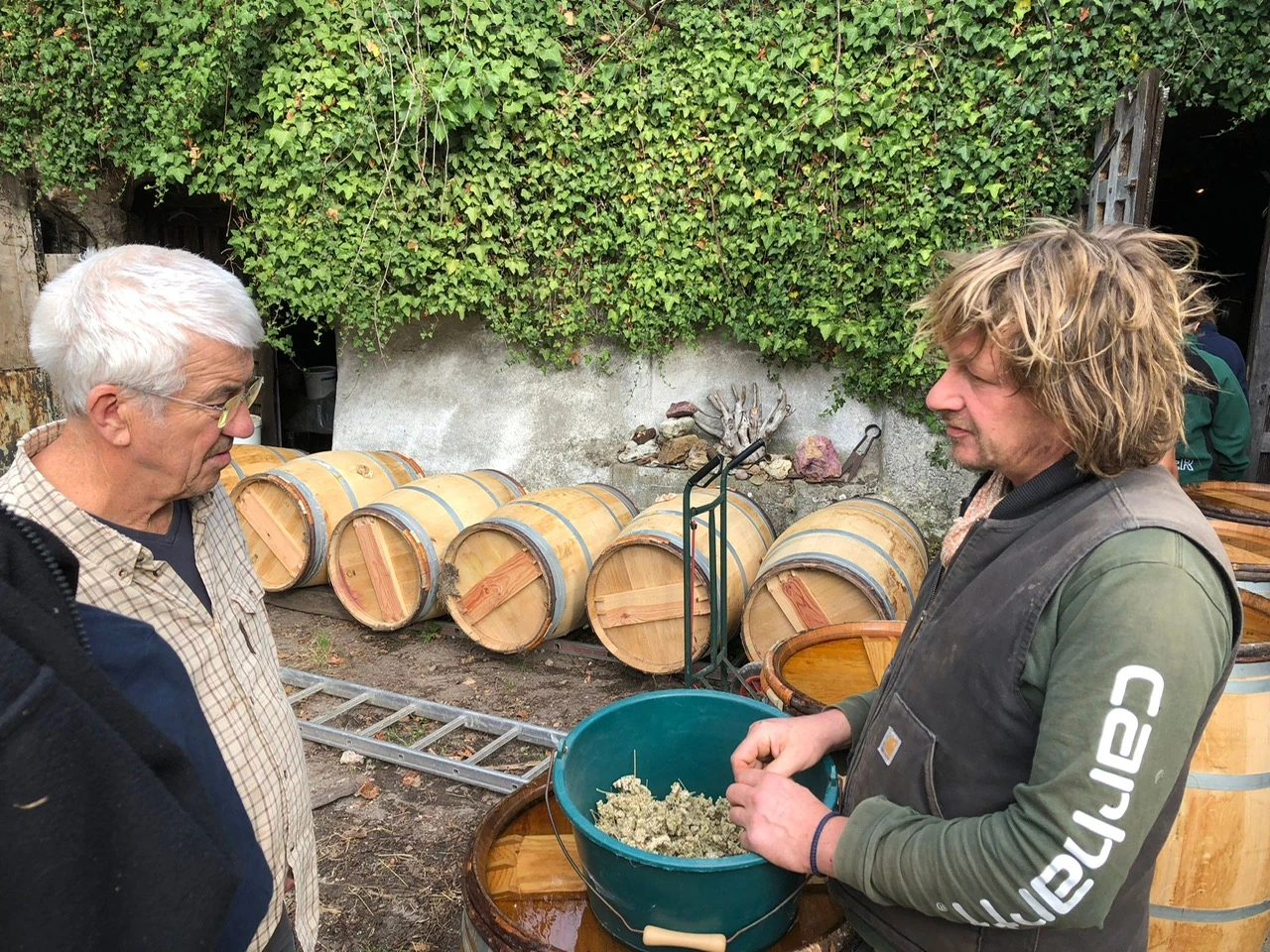
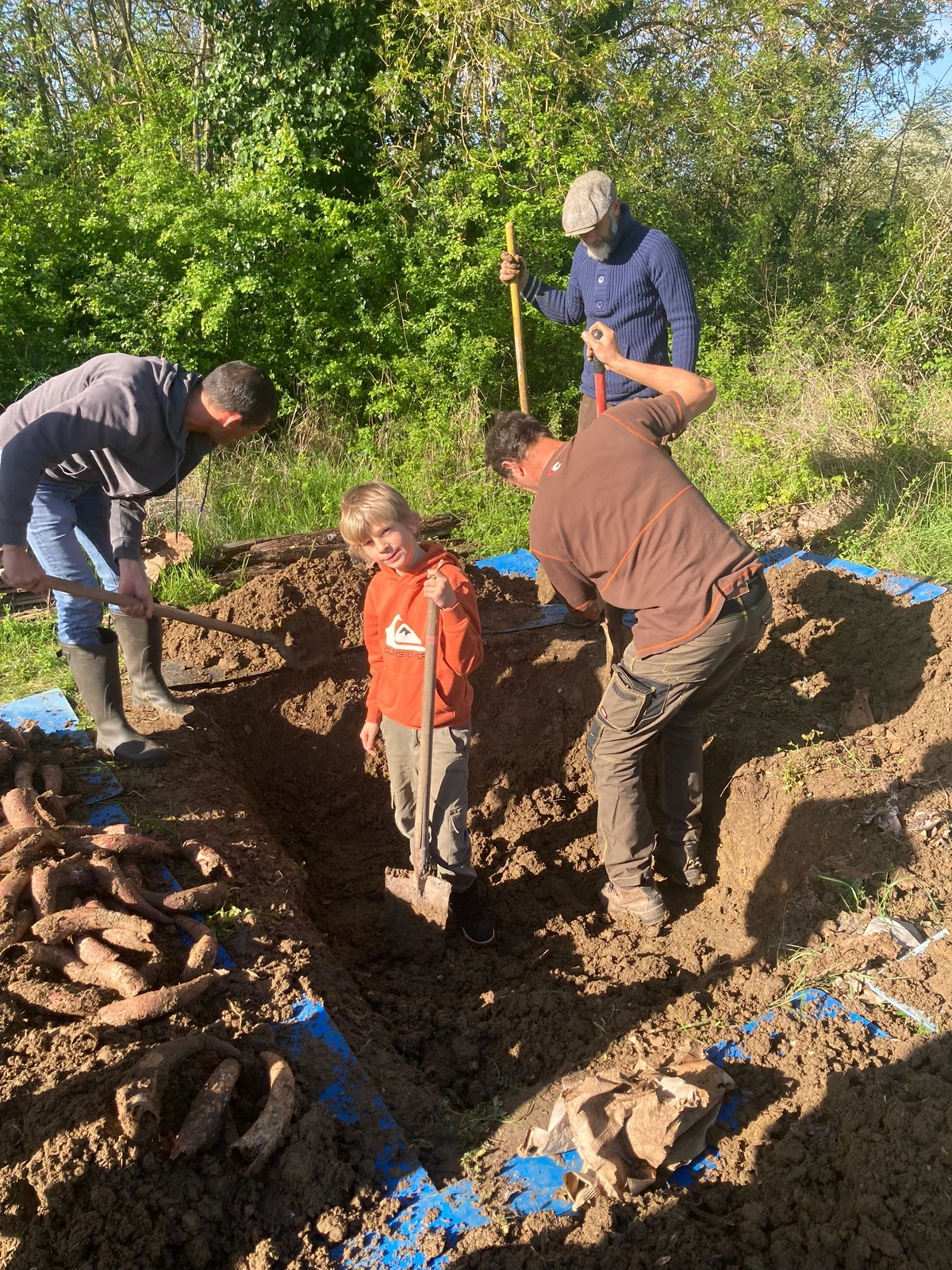
Biodynamics views a farm as an interconnected whole. Soil, plants, animals and people belong together. Working with preparations is part of that practice. For us, this includes preparing them together, observing and sharing experience.
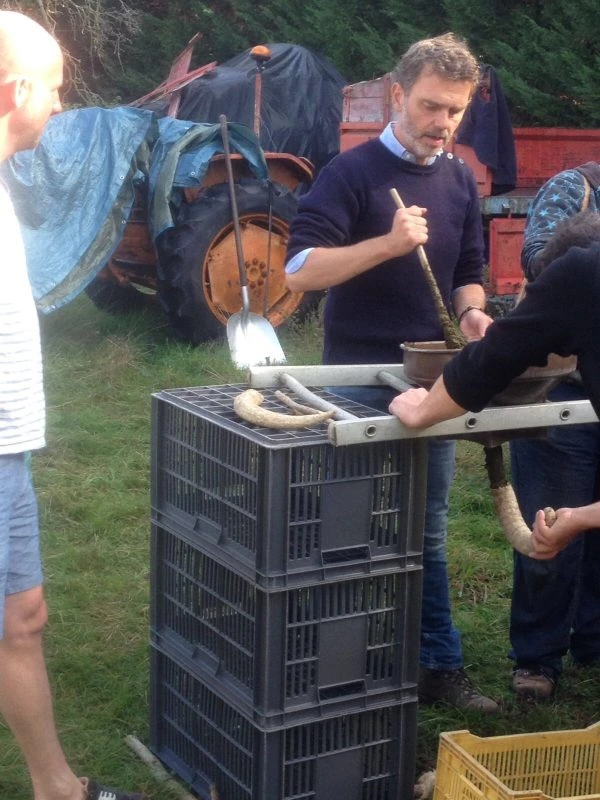
500 · Horn manure
Preparation 500 is made from cow manure matured in a cow horn in the earth. Before application, it is stirred in water and sprayed over the soil.
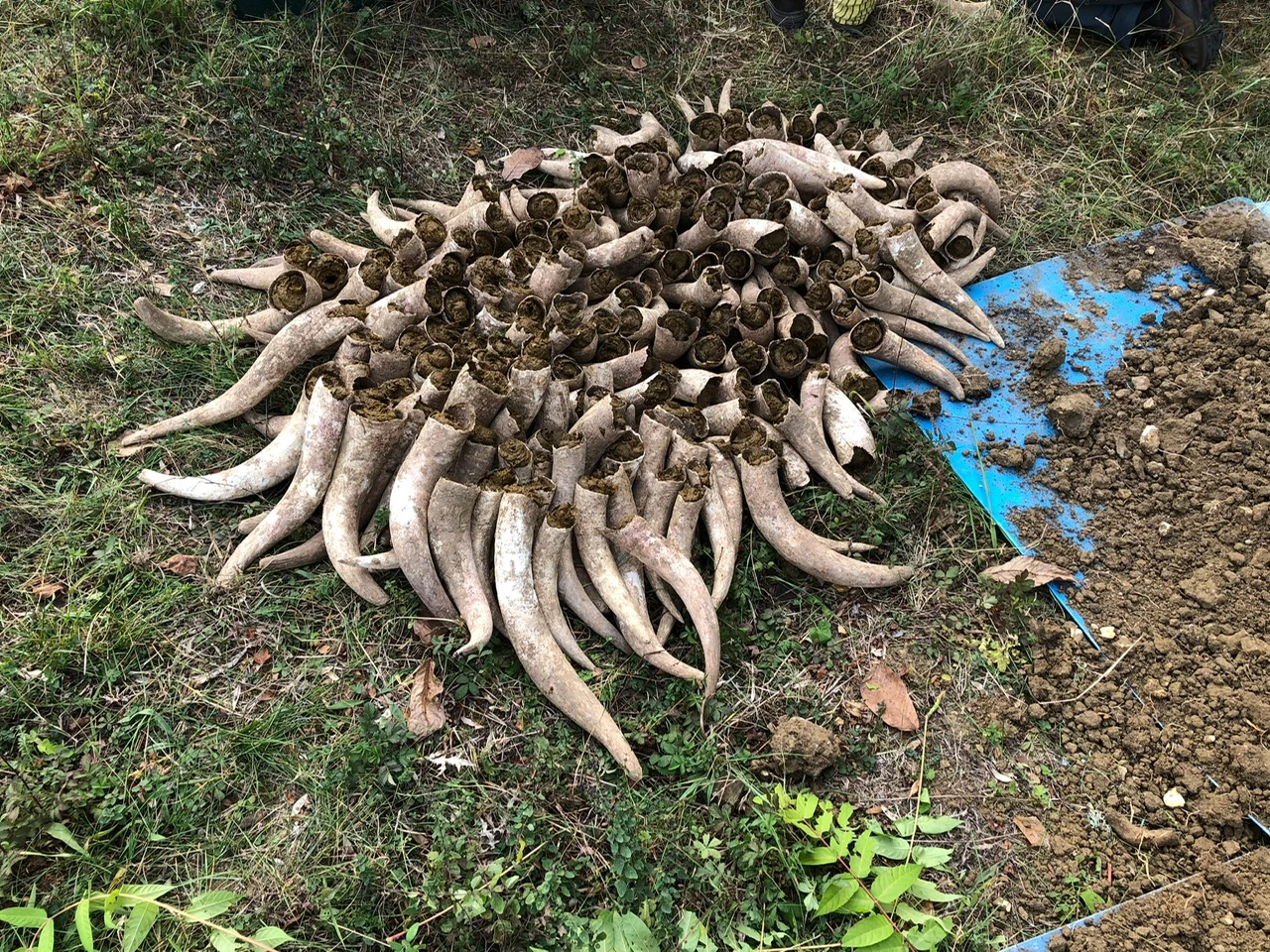
501 · Horn silica
Preparation 501 is made from finely ground quartz, also prepared in a cow horn. It is stirred in water and applied to the crop as a fine mist, timed to the plants’ development.
Using 500 and 501 is compulsory in Demeter-certified farming. The standards set out their application to productive land and the conditions for different crops and situations.
Learn more from Stichting Demeter and the 2026 Demeter standards, §6.2.
Animals belong here too.
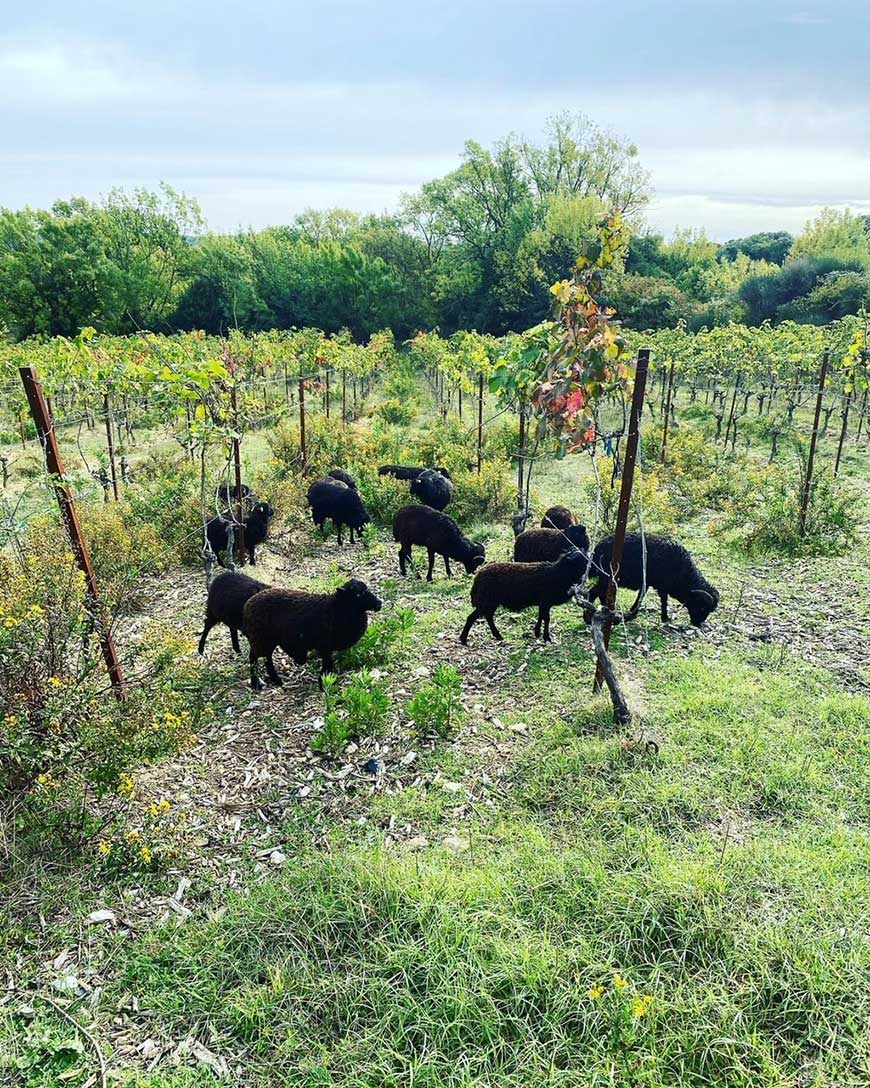
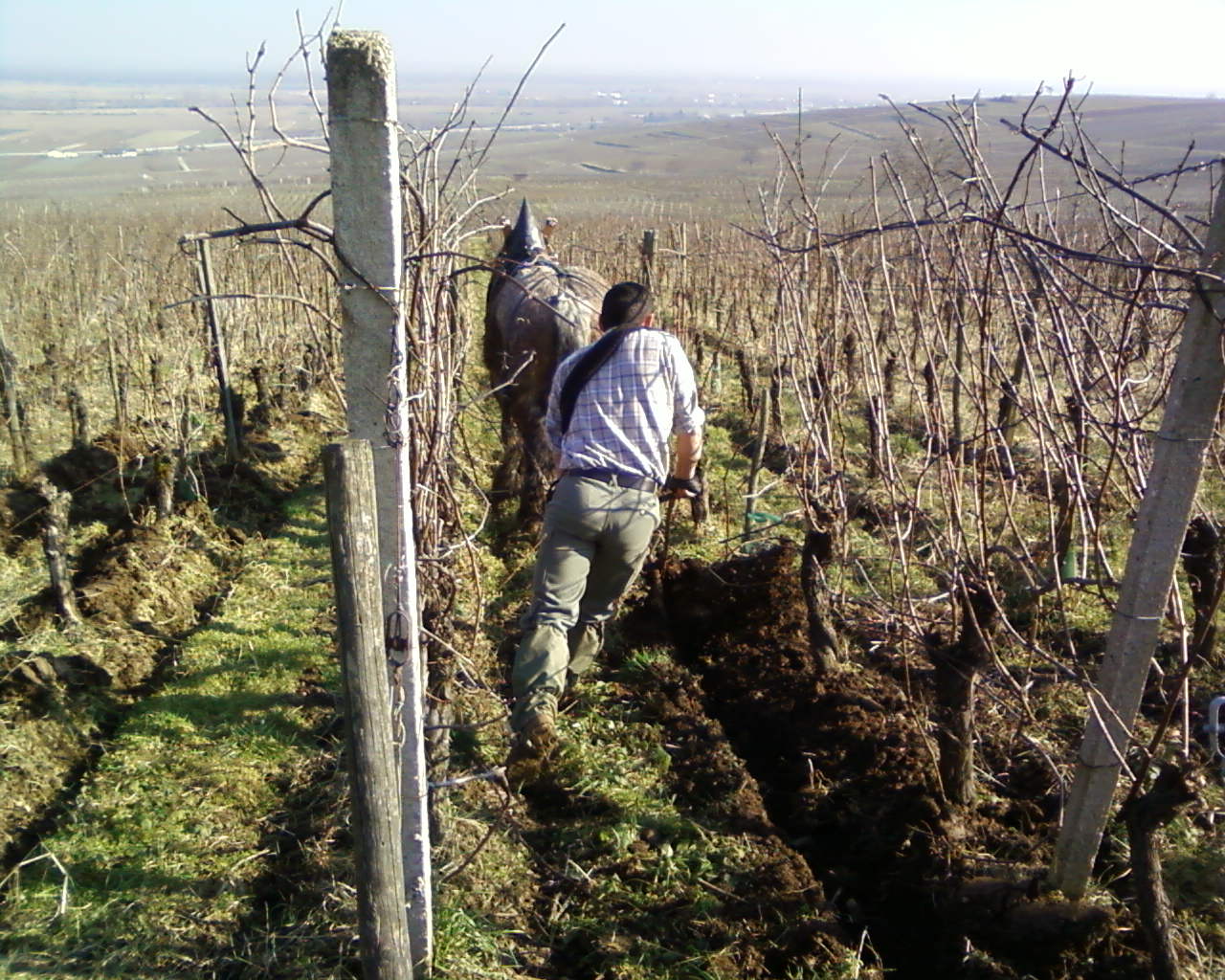
Sheep between the rows, a horse at work, manure returning to the land. In biodynamics, animals have a place in the farm’s cycle. Among the growers we work with, we also see the personal bond: care, attention and love for their animals.
Every grower gives the craft a shape of their own. Bert looks at those choices and the people making them. If you want to know more about a wine, ask him how that bottle came to be.